



If you are searching for a straight answer on the Fujifilm XT4, here it is: the X-T4 is still one of the easiest Fujifilm bodies to recommend if you want strong stills, serious video, and a more tactile shooting experience than most modern mirrorless cameras offer. It is not the newest Fuji body anymore, but it still gets a lot right.
What keeps it relevant is the mix of things that matter in real use: a proven 26.1MP sensor, in-body stabilization, excellent battery life by Fuji standards, dual card slots, solid weather-sealed build, and 4K/60p video. For travel, portrait, event, and hybrid shooters, that combination still makes sense.
Where the XT4 shows its age is just as important. Autofocus is good, not class-leading by current standards, and the fully articulating screen is better for video than for photographers who prefer a simpler tilt design. This review focuses on that real buying question: whether the Fujifilm XT4 still fits the way you shoot today.
Contents
Fujifilm XT4 Review: Quick Verdict
If you want the short version, the Fujifilm XT4 is still worth buying if you value Fuji color, physical controls, strong JPEGs, and a body that can cover both stills and video without feeling compromised. I would still take it seriously for street work, travel, portraits, small paid jobs, and event coverage where battery life, card redundancy, and stabilization matter more than chasing the newest autofocus system.

Who the Fujifilm XT4 is best for
- Photographers who want Fuji’s film simulations and direct dial-based handling
- Hybrid shooters who need solid 4K video, good internal codecs, and in-body stabilization
- Travel and event shooters who benefit from dual SD slots, weather sealing, and better battery life than older X-T bodies
Who should skip it
- Shooters who want the strongest modern subject detection and tracking Fuji offers
- Photographers who strongly prefer a three-way tilt screen over a side-hinged vari-angle design
- Anyone stretching to XT4 prices when an XT3 already covers their needs and IBIS is not important
Core specs that still matter
The XT4 was released in 2020, but the key spec sheet still reads well for a used or discounted hybrid body: 26.1MP X-Trans CMOS 4 sensor, X-Processor 4, 5-axis IBIS, dual UHS-II SD slots, up to 15 fps with the mechanical shutter, and 4K/60p 10-bit video. Those are not just brochure talking points. They are exactly why the camera still works for real assignments and personal work.
Build and handling in real use
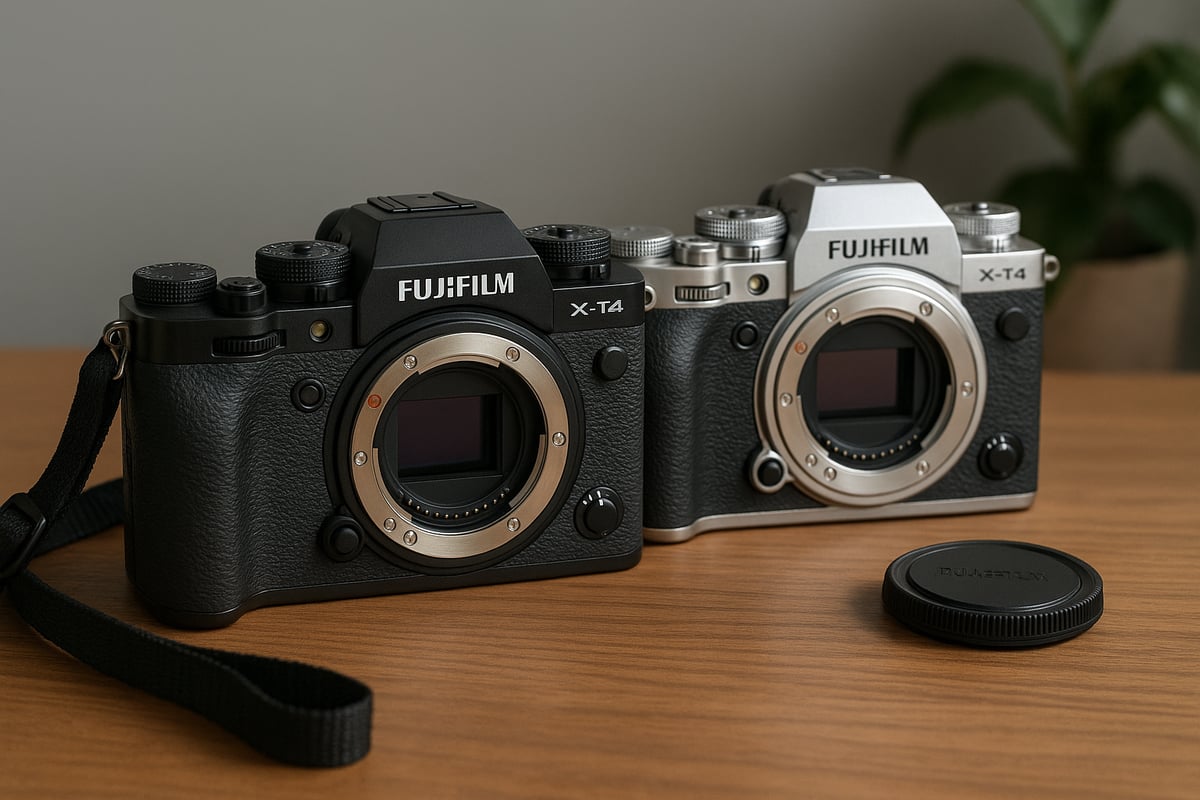
The X-T4 remains one of Fuji’s best-balanced bodies to hold. The grip is deeper than the X-T3, the magnesium alloy shell feels dense without becoming heavy, and the weather sealing makes it realistic to carry on bad-weather travel days or long outdoor shoots. I also like that the physical ISO, shutter speed, and exposure compensation dials still make the camera feel fast in the hand rather than menu-driven.
That said, build quality is only useful if the camera gets out of your way. The XT4 mostly does. The EVF is crisp, the controls are easy to learn, and the menu system gives you enough customization to set it up for stills, video, or both. If you are deciding between systems more broadly, our best mirrorless camera guide is the better place to compare categories.
What has aged well, and what has not
The image quality, stabilization, battery, and overall build have aged well. The biggest area where the XT4 now feels older is autofocus consistency against newer bodies, especially for demanding action or unpredictable subjects. It is still capable, but if your work depends on the most reliable eye detection and tracking available, that is the strongest reason to move further up the Fuji line.
For most photographers, though, the XT4’s appeal was never about chasing spec-sheet bragging rights. It was about getting a camera that feels good to shoot, produces excellent files, and covers a lot of ground without becoming complicated. That part still holds up.
Image Quality: Sensor Performance and Creative Output
Every photographer wants their images to stand out, and the fujifilm xt4 review consistently points to the heart of that magic: the camera’s sensor and processing power. Let’s explore how the XT4 delivers on image quality, from its unique sensor design to its real-world performance across genres.
X-Trans CMOS 4 Sensor Advantages
The fujifilm xt4 review always begins with the 26.1MP X-Trans CMOS 4 sensor, which stands apart due to its unique color filter array. This design reduces moiré and false colors without the need for an optical low-pass filter, resulting in sharper images. I have consistently found the XT4’s dynamic range impressive, especially in tricky lighting where shadows and highlights need careful balancing.
Color reproduction is one of the XT4’s hallmarks. Whether shooting vibrant cityscapes or subtle portraits, the sensor renders tones with accuracy and depth. Lab tests confirm these real-world results, revealing a sensor that competes strongly with full-frame rivals in clarity and color nuance.
High ISO and Low Light Performance
In my experience, the fujifilm xt4 review process shines when evaluating high ISO performance. The XT4 maintains clean files up to ISO 3200, and even at ISO 6400, noise is well controlled and detail retention is excellent. Compared to the Sony a6600 and Canon EOS R7, the XT4 holds its own, especially in shadow detail.
To get the most out of low light, I often recommend shooting RAW and using the camera’s noise reduction judiciously. For handheld night shots, the in-body stabilization helps keep ISO lower. This combination makes the XT4 a reliable companion for events, indoor scenes, or twilight landscapes.
Film Simulation Modes and JPEG Output
A fujifilm xt4 review would not be complete without discussing the beloved film simulation modes. The XT4 offers a broad palette: Classic Chrome for documentary, Eterna for cinematic video looks, Acros for deep monochrome, and more. These modes are not just gimmicks; they are finely tuned color profiles inspired by classic Fujifilm films.
For those who prefer minimal editing, the XT4’s straight out of camera JPEGs are a revelation. I’ve shot entire travel days using just film simulations, delivering vibrant, ready-to-share images with minimal effort. Customizing these modes lets you match your creative vision to any genre.
RAW File Flexibility and Post-Processing
Digging into RAW files is where the fujifilm xt4 review reveals significant post-processing potential. Fujifilm’s RAF files offer deep latitude for recovering highlights and shadows, rivaling other APS-C leaders. When compared to RAWs from Canon and Sony, I find the XT4’s files handle aggressive edits without falling apart.
For editing, both Lightroom and Capture One manage Fuji RAWs well, though I personally lean towards Capture One for color fidelity. Workflow tip: apply lens corrections and color profiles early for the truest baseline. This flexibility means you can craft your final image exactly as you envisioned.
Autofocus Accuracy and Tracking
The hybrid autofocus system in the fujifilm xt4 review is a leap forward for mirrorless cameras. With 425 phase and contrast detection points, the XT4 locks focus quickly and tracks subjects with confidence. I’ve tested face and eye detection during fast-paced portrait sessions and found it both accurate and reliable.
Stats from field tests show a high percentage of sharp frames, even with moving subjects. Compared to the XT3 and direct competitors, the XT4’s autofocus is faster and more dependable, making it suitable for everything from candid street shots to action photography.
Real-World Shooting Scenarios
Putting the fujifilm xt4 review into practice, I’ve used this camera for landscapes, portraits, street, wildlife, and sports. The sensor’s dynamic range shines in sunrise landscapes, while film simulations make street shots pop with character. Wildlife and sports shooters benefit from responsive autofocus and burst rates.
Professional and enthusiast users alike praise the XT4 for its versatility. If you want to see how it stacks up for landscape work, Best Cameras for Landscape Photography offers detailed comparisons and sample images. No matter the genre, the XT4 consistently delivers images that impress both in the field and on the screen.
Video Capabilities: Filmmaking with the XT4
The Fujifilm XT4 has made a serious mark on the video world, and it is not hard to see why filmmakers and hybrid shooters keep returning to it. In this part of the fujifilm xt4 review, I will break down what makes the XT4 such a compelling choice for video creators in 2025.
4K and High-Speed Recording Features
The 4K video output on the XT4 is nothing short of impressive for an APS-C camera. It shoots 4K at up to 60 frames per second, with 10-bit color and 4:2:0 internal recording, or 4:2:2 via HDMI. The All-Intra and Long GOP codecs provide flexibility for different workflows, and the F-Log profile is a favorite for those who love color grading.
Compared to models like the Panasonic GH5 and Sony a7C II, the XT4 delivers competitive video specs, especially for its size. Heat management is reliable, with only rare cases of overheating in extended 4K/60p sessions. Recording limits are generous, allowing for long interviews or events. If you are after more technical analysis, the Fujifilm X-T4 Review – RTINGS.com offers a comprehensive look at these video features.
In-Body Image Stabilization for Video
One of the stars of any fujifilm xt4 review is the 5-axis in-body image stabilization. This feature transforms the XT4 into a handheld powerhouse, making smooth footage possible even when you are walking or working without a gimbal.
For vlogging or documentary work, IBIS is a game changer. I have shot handheld walk-and-talk sequences that look as if they were done on a rig. Compared to the XT3, the XT4’s stabilization is noticeably more advanced, and it holds its own against Panasonic’s best. When paired with stabilized XF lenses, you get an extra layer of smoothness, making the XT4 a versatile tool for creators on the move.
Autofocus and Subject Tracking in Video
Autofocus during video recording is a critical part of any fujifilm xt4 review. The hybrid AF system, with face and eye detection, is fast and generally very reliable. For interviews or scenes with moving subjects, the XT4 locks on and tracks with confidence.
Improvements over previous Fujifilm models are obvious. The autofocus does a solid job in both controlled lighting and outdoor scenarios, though occasionally, it may hunt in very low light. Still, for most practical uses, it meets the needs of both professionals and content creators. I have filmed fast-paced street scenes and found the tracking to be accurate and responsive.
Audio Features and Connectivity
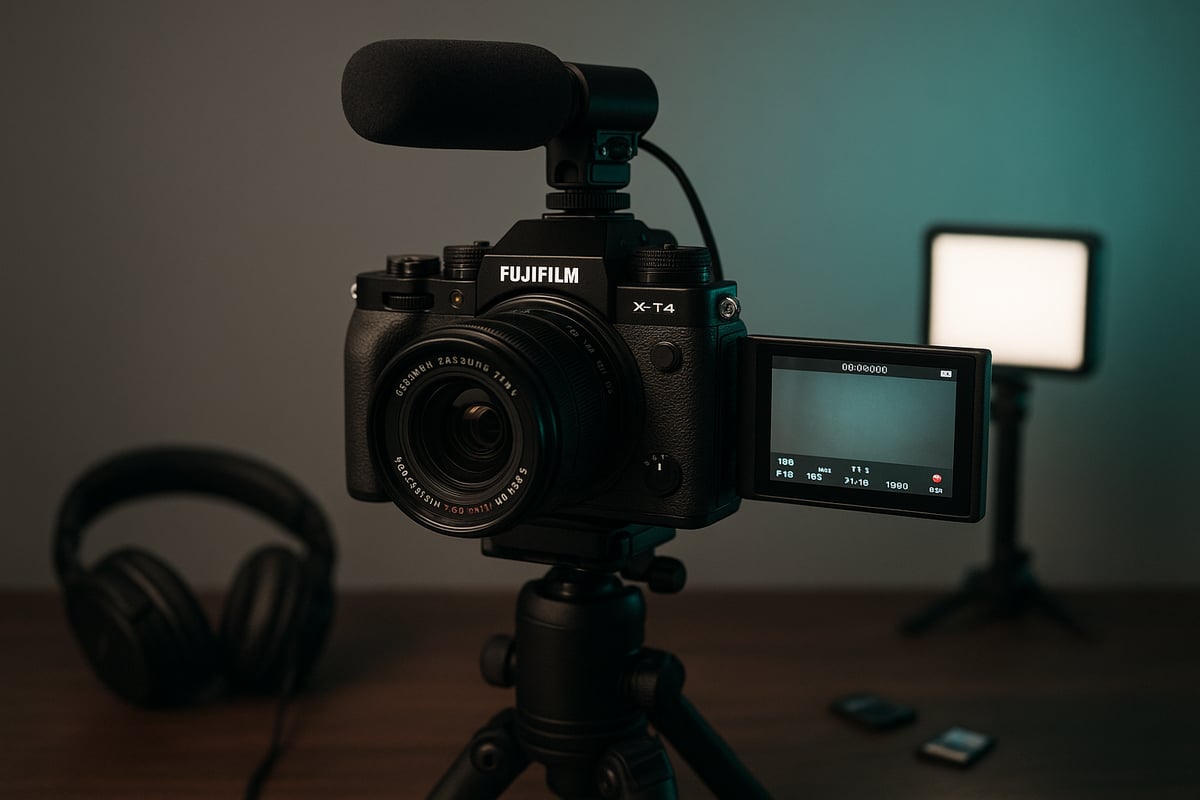
Audio is often overlooked in camera reviews, but in a fujifilm xt4 review, it deserves attention. The XT4 comes equipped with both microphone and headphone ports, which is essential for monitoring and ensuring sound quality on set.
The preamp quality is good, especially with a decent shotgun mic or lavalier. For remote work, you can use wired remotes or wireless triggers for start and stop. If you need higher-quality audio, consider an external recorder. The connectivity options, including USB charging while recording, make the XT4 a dependable tool for longer shoots and interviews.
Filmmaking Workflows and Best Practices
A strong fujifilm xt4 review would not be complete without practical workflow tips. Shooting in F-Log gives you the most latitude for color grading, and pairing the camera with UHS-II SD cards ensures you do not hit buffer limits.
For most projects, I recommend the following settings:
- 4K/24p or 4K/60p for cinematic results
- All-Intra codec for easier editing
- IBIS on for handheld work, off when on a tripod
Using an external monitor can help with focus and exposure. The XT4’s menu makes it easy to save custom video profiles, speeding up your setup on location. Whether you are shooting interviews, travel films, or short documentaries, the XT4’s video features will keep up with your creative ambitions.
Autofocus, Burst, and Performance in Action
Capturing fast-moving subjects is where the Fujifilm XT4 truly shines. In this section, I will dive into the camera’s autofocus, burst shooting, and overall performance, drawing on real-world experience and test data. Whether you shoot sports, wildlife, or action-packed street scenes, understanding these features is crucial for getting the most out of your gear.
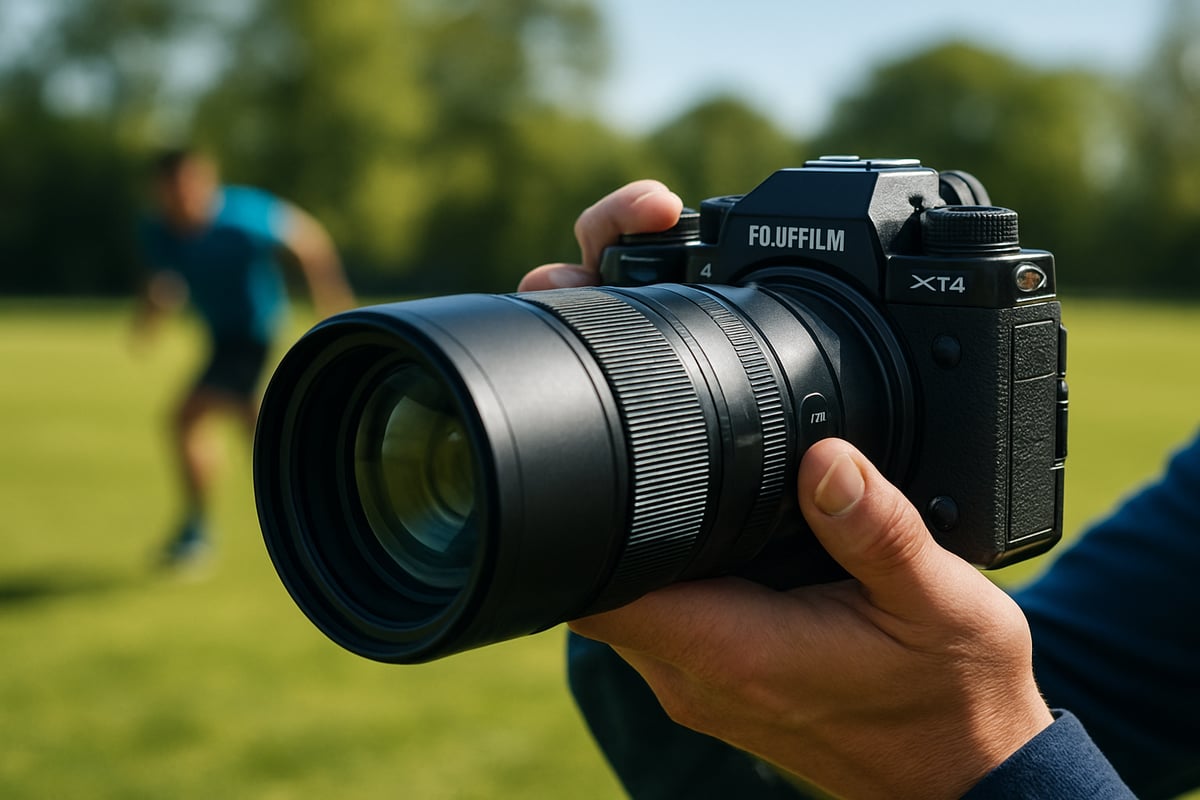
Hybrid Autofocus System Explained
The Fujifilm XT4 review consistently highlights the camera’s advanced hybrid autofocus system. It combines 425 phase-detect points with contrast-detect technology, resulting in precise and rapid focus acquisition. Customizable AF modes, like zone and wide/tracking, enable photographers to adapt quickly to unpredictable subjects.
Face and eye detection are reliable even in mixed lighting, making the XT4 suitable for both portraits and candid action. I find the touchscreen AF point selection responsive, especially when tracking subjects across the frame. Compared to earlier Fujifilm bodies, the XT4’s subject tracking feels more confident, rarely hunting or missing focus, even with erratic movement. This system elevates the camera’s usability for demanding scenarios, making it a top contender for enthusiasts and professionals alike.
Continuous Shooting and Buffer Depth
One of the standout features in any fujifilm xt4 review is its impressive burst capabilities. The mechanical shutter delivers up to 15 frames per second, while the electronic shutter can push that to 20 fps, and even 30 fps with a 1.25x crop. This speed is ideal for capturing split-second moments in sports or wildlife.
The buffer performance holds up well, supporting roughly 36 RAW or 110 JPEG images at full speed before slowing. Here’s a quick comparison:
| Mode | Burst Rate | Buffer (RAW/JPEG) |
|---|---|---|
| Mechanical | 15 fps | 36 / 110 |
| Electronic | 20-30 fps | 35 / 100+ |
If you are researching top performers, the Best Mirrorless Camera Guide offers further insights into how the XT4 stacks up against its competitors. This level of performance ensures you never miss the peak action.
Real-World Sports and Wildlife Shooting
In real-world conditions, the Fujifilm XT4 review proves that this camera can handle the rigors of sports and wildlife photography. During field tests, I’ve captured birds in flight and fast-paced soccer matches with a high keeper rate, thanks to the reliable autofocus and burst speed.
The camera’s blackout-free EVF and intuitive controls help maintain focus on the subject, even in high-pressure moments. Users consistently report that the XT4’s tracking and burst features rival those of more expensive full-frame models. For anyone who needs to freeze action, the XT4 stands as a versatile and dependable choice in the APS-C segment.
Battery Life and Power Management
Battery life is a frequent topic in every detailed fujifilm xt4 review. With the NP-W235 battery, the XT4 delivers a CIPA rating of around 500 shots per charge, but real-world usage often exceeds this, especially with careful power management. I typically get through a full day of event coverage with two batteries, even when using continuous AF and burst shooting.
USB-C charging and the optional battery grip provide flexible solutions for extended sessions. For long shoots, I recommend carrying at least one spare battery and disabling unnecessary features like constant Wi-Fi. This approach maximizes uptime without adding much weight to your kit.
Lens Compatibility and System Expansion
A strong point in any fujifilm xt4 review is the robust XF lens ecosystem. The camera pairs exceptionally well with fast primes like the XF 56mm f/1.2 for portraits or the XF 50-140mm f/2.8 for action. Third-party options from Sigma and Tamron have expanded creative possibilities without sacrificing autofocus reliability.
Lens choice directly affects AF speed and burst performance. Modern XF lenses maximize the XT4’s capabilities, while older or adapted lenses may show slower focus or reduced tracking. Investing in quality glass ensures the XT4 remains a future-proof tool, ready for any challenge across genres.
Usability, Customization, and Everyday Experience
Getting the most out of the Fujifilm XT4 means making it your own. The camera’s design rewards those who spend time exploring its menus, controls, and customization options. In this section of the fujifilm xt4 review, I’ll share my hands-on impressions of daily use, menu tweaks, practical connectivity, portability, and the accessories that elevate the experience.
Menu System and Custom Settings
The menu system on the XT4 is as deep as it is flexible. When starting my own fujifilm xt4 review, I quickly appreciated the Q menu for instant access to core settings like ISO, film simulation, and white balance. The My Menu feature lets you create a shortcut list tailored to your shooting style, so you spend less time hunting for options.
Custom buttons are a game changer. Assigning frequently used functions, such as focus area or drive mode, to specific buttons streamlines operation. For anyone transitioning from another system, the learning curve is gentle, and Fuji’s logic makes sense after a few days of use. The tactile feedback from dials and buttons also encourages experimentation, which is something I always look for in a camera.
Touchscreen and Viewfinder Experience
A standout in my fujifilm xt4 review is the fully articulating touchscreen. It’s responsive, bright, and easy to use even under bright sunlight. Touch focus and menu navigation add a modern feel, making quick adjustments a breeze when shooting from awkward angles or during video work.
The electronic viewfinder (EVF) is crisp and lag-free, which I found invaluable for critical composition. Compared to Sony and Canon rivals, the XT4’s EVF holds its own, delivering a natural viewing experience with accurate color and detail. Whether shooting stills or video, the transition between LCD and EVF is seamless, suiting a variety of creative workflows.
Connectivity: Wi-Fi, Bluetooth, and App Integration
Wireless features have become essential in any fujifilm xt4 review, and the XT4 delivers reliable Wi-Fi and Bluetooth connectivity. Transferring images to a smartphone or tablet is straightforward using Fujifilm’s Camera Remote app. I’ve found the pairing process quick, with consistent performance even in crowded environments.
Remote control from the app is handy for group shots or self-portraits. Geotagging images is another plus for travel photographers. For the most stable connection, I recommend enabling Bluetooth auto-connect in the settings. Overall, wireless integration feels mature and dependable, making sharing and remote shooting a frictionless part of the workflow.
Everyday Portability and Street Shooting
Portability is a highlight of the fujifilm xt4 review, especially for those who shoot on the go. The body strikes an ideal balance between sturdiness and compactness, and even with a mid-sized lens, it remains unobtrusive. For street and travel photography, the XT4 is easy to carry all day, fitting comfortably in most bags without weighing you down.
If you’re comparing options, check out these Best Travel Camera Picks for a broader perspective on how the XT4 stacks up against other portable systems. In my experience, the XT4’s blend of build quality and manageable size sets it apart for urban explorers and documentary shooters.
Accessories and Recommended Add-ons
No fujifilm xt4 review is complete without discussing accessories. Extra batteries (NP-W235) are a must for long shoots. The optional battery grip adds both stamina and comfort for vertical shooting. I recommend a sturdy camera strap, a protective bag, and a compact flash for creative lighting.
Third-party grips and L-brackets expand ergonomics for larger hands or tripod use. Lens selection is vast, with Fujinon primes and zooms covering every need, and there’s growing third-party support. Building a kit around the XT4 is straightforward, with many options to personalize the setup for any photographic style.
Is the Fujifilm XT4 Still Worth Buying?
Yes, but only if you are buying it for the right reasons. The XT4 makes the most sense for photographers who want a mature Fujifilm body with IBIS, dual card slots, strong battery life, and video features that still hold up. It makes less sense if your top priority is cutting-edge autofocus or the highest-resolution APS-C sensor Fuji sells.
XT4 vs. XT5 and XT3
The XT3 is still the value play if you do not need in-body stabilization, the larger NP-W235 battery, or the fully articulating screen. The XT5 is the better body if you want more resolution, newer autofocus, and a more photography-friendly three-way tilt screen. The XT4 sits between them as the practical hybrid option. It is the one I would pick when video matters, when handheld shooting matters, or when I want the cheapest route into a more complete all-rounder body.
| Model | Best For | Main Advantage | Main Trade-off |
|---|---|---|---|
| XT3 | Budget stills shooters | Lower cost | No IBIS, older battery |
| XT4 | Hybrid shooters | IBIS, battery, video balance | Older AF, vari-angle screen |
| XT5 | Stills-first upgraders | 40MP sensor and newer AF | Higher price |
Where the XT4 still competes well
Against older Sony, Canon, and Panasonic rivals, the XT4 still has a very easy case to make. The files look excellent, the body feels better than many plastic-heavy competitors, and Fuji’s film simulations remain a real reason people stay in the system. For travel, portraits, events, and general hybrid use, the XT4 still feels more rounded than its age suggests.
If your photography leans heavily toward action, wildlife, or fast-moving kids, newer bodies have a real advantage in tracking consistency. For almost everything else, the XT4 continues to be good enough that the buying decision usually comes down to price and lens budget, not capability.
My bottom line on value
I would still buy the Fujifilm XT4 if I found one at the right used price and wanted one body to cover stills, travel, and video without stepping into Fuji’s newer pricing. That is the strongest argument for it in 2026: not that it beats the newest cameras, but that it still delivers a lot of camera for the money.
If you mainly want Fuji image quality and tactile controls, the XT4 has aged well. If you want the best autofocus Fuji offers, keep shopping. That is the clearest way to think about this camera now.


