



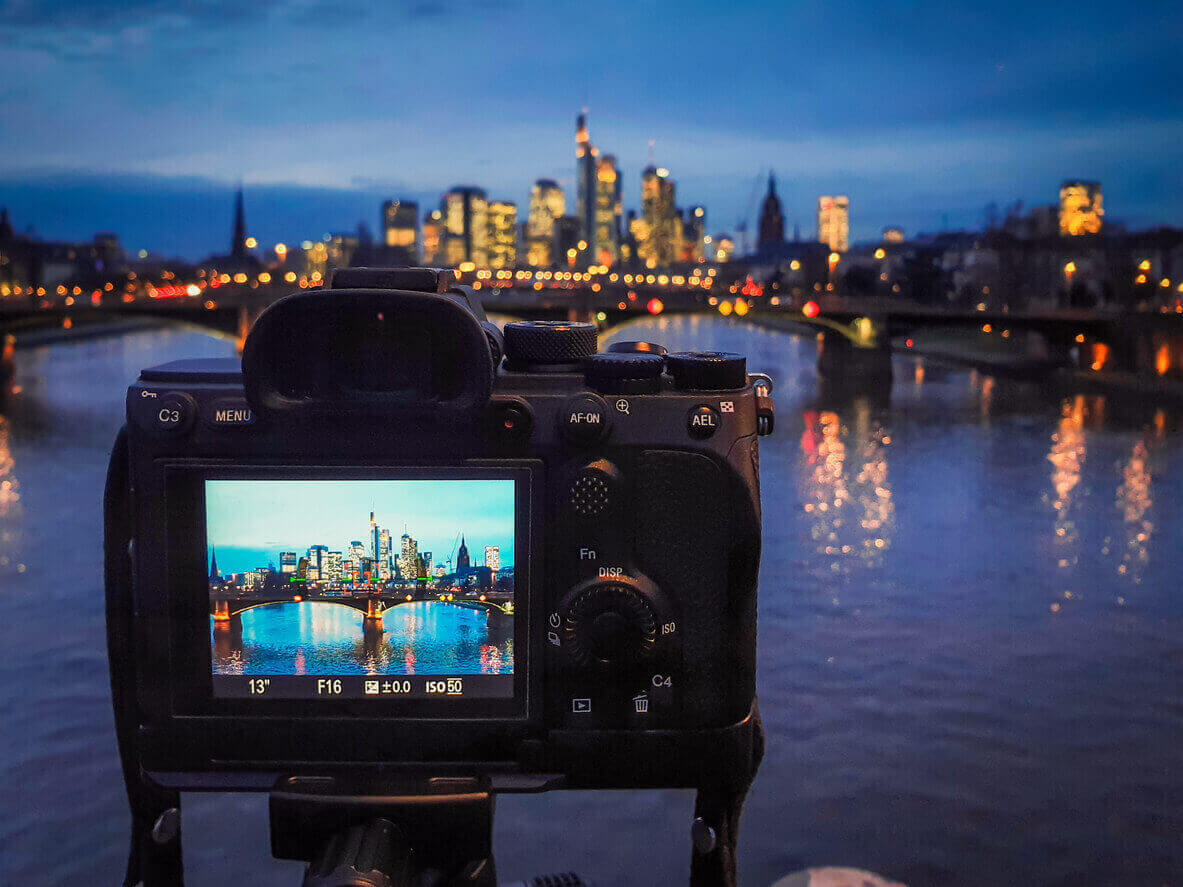
If you are shopping for the best budget mirrorless camera in 2026, the first thing to get straight is what “budget” really means. In today’s market, truly cheap mirrorless cameras mostly live in the used and refurbished space, while the strongest new models usually sit between $650 and $1,000 with a kit lens. That is why I do not like vague budget lists. A useful guide needs specific camera models, realistic price bands, and honest trade-offs.
After shooting with budget mirrorless bodies from Sony, Canon, Nikon, Panasonic, Olympus, and Fujifilm, I have found that the best value usually comes from one of three strategies: buy an excellent older body used, buy a current entry-level model with room to grow, or stretch slightly for a camera body that will not feel limiting in a year. This guide is built around those decisions, so you can choose the right mirrorless camera without paying for features you will never use.
Contents
- Quick Answer: What Is the Best Budget Mirrorless Camera in 2026?
- Quick Comparison: Best Budget Mirrorless Cameras in 2026
- How to Choose a Budget Mirrorless Camera Without Wasting Money
- 10 Best Budget Mirrorless Cameras in 2026
- 1. Sony A6100 – Best Overall Budget Mirrorless Camera
- 2. Canon EOS R50 – Best Modern Canon Budget Mirrorless Camera
- 3. Canon EOS R100 – Best Cheap New Mirrorless Camera
- 4. Used Canon EOS M50 Mark II – Best Used Buy for Beginners
- 5. Canon M200 – Best Tiny Mirrorless Camera for Casual Use
- 6. Panasonic Lumix G7 – Best Budget Mirrorless Camera for Video Value
- 7. Nikon Z30 – Best Nikon Budget Mirrorless for Video Creators
- 8. Nikon Z50 – Best Nikon Budget Mirrorless with a Viewfinder
- 9. Olympus OM-D E-M10 Mark IV – Best Small Travel Mirrorless Camera
- 10. Used Fujifilm X-S10 – Best Stretch Budget Mirrorless Camera
- Which Budget Mirrorless Camera Should You Buy?
- How Much Should You Spend on a Budget Mirrorless Camera?
- Frequently Asked Questions
- Final Verdict
Quick Answer: What Is the Best Budget Mirrorless Camera in 2026?
If you want the shortest answer, the Sony A6100 remains the best all-around budget mirrorless camera for most photographers because it combines strong autofocus, excellent image quality, and access to the deep Sony E-mount lens system. If you want the best modern Canon option, choose the Canon EOS R50. If your budget is tighter, the Panasonic Lumix G7, Canon M200, and used Canon EOS M50 Mark II are still excellent value buys.
Quick Comparison: Best Budget Mirrorless Cameras in 2026
| Camera | Typical Price | Sensor | Why It Stands Out | Best For |
|---|---|---|---|---|
| Sony A6100 | $700-800 new | APS-C | Best autofocus and lens ecosystem for the money | Most photographers |
| Canon EOS R50 | $700-900 new | APS-C | Best modern Canon budget body | Beginners and hybrid shooters |
| Canon EOS R100 | $500-650 new | APS-C | Lowest-cost entry into Canon RF | First-time interchangeable-lens buyers |
| Used Canon EOS M50 Mark II | $450-650 used | APS-C | Still one of the easiest cameras to learn on | Beginners and casual creators |
| Canon M200 | $400-550 used | APS-C | Small, simple, and affordable | Travel and family use |
| Panasonic Lumix G7 | $400-550 new or used | Micro Four Thirds | Excellent budget 4K video value | Video-first buyers |
| Nikon Z30 | $650-800 new | APS-C | Strong beginner video camera in Nikon’s Z system | Vloggers and Nikon newcomers |
| Nikon Z50 | $750-900 new | APS-C | Best Nikon budget choice with EVF | Enthusiasts and Nikon users |
| Olympus OM-D E-M10 Mark IV | $650-800 new | Micro Four Thirds | Compact body with in-body stabilization | Travel and street photography |
| Used Fujifilm X-S10 | $800-1,000 used | APS-C | Premium image quality if you can stretch | Enthusiasts who want more room to grow |
How to Choose a Budget Mirrorless Camera Without Wasting Money
When I test cheaper mirrorless bodies, I do not ask whether they are perfect. I ask whether they are good enough to help you grow and whether the system around them makes sense. That means looking at more than the camera body alone.
Prioritize Autofocus Before Fancy Extras
Many buyers obsess over megapixels and ignore autofocus, but autofocus quality affects almost every photo you take. A budget mirrorless body with reliable eye detection and decent subject tracking is far more useful than a slightly sharper camera that misses focus. This is one reason the Sony A6100 and Canon EOS R50 stand out so clearly in this category.
Think About Lens Costs Early
The best budget mirrorless camera can become expensive fast if the lenses are overpriced. Sony E-mount gives you the broadest budget-friendly lens choice. Canon RF is improving, but the cheapest bodies are stronger than the cheapest native lenses. Micro Four Thirds remains one of the smartest systems for affordable lens building. If you want to stay with Canon but keep costs lower, a used EOS M body can still make sense, though that mount is no longer Canon’s future.
Know When Used Makes More Sense Than New
The used market is where many of the best budget mirrorless camera deals live. I would much rather buy a clean used Fujifilm X-S10 or Canon M50 Mark II from a reputable dealer than buy a weak new body just because it is factory fresh. A camera is a tool, not a fashion item. If used gets you better autofocus, stabilization, or a stronger sensor, it is usually the smarter move.
Match the Camera to the Way You Actually Shoot
If you shoot family moments, travel, and everyday life, compact size and ease of use matter. If you care about YouTube, autofocus during video and a flip screen matter more. If you expect to shoot sports or wildlife, cheap bodies get exposed quickly. Budget buying works best when the camera suits your real use case instead of some imaginary future workload.
10 Best Budget Mirrorless Cameras in 2026
1. Sony A6100 – Best Overall Budget Mirrorless Camera

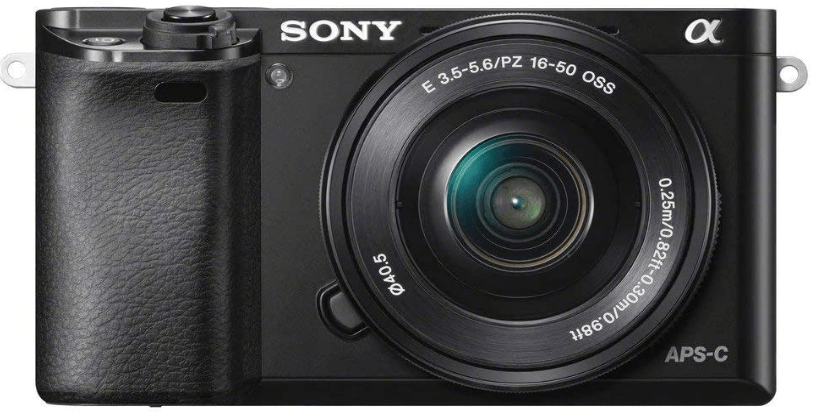
Sensor: 24.2MP APS-C | Mount: Sony E | Video: 4K | Burst: 11 fps | Price: about $700-800 new
The Sony A6100 is still the best budget mirrorless camera for most people because it does the important things very well and belongs to the deepest lens ecosystem in this price range. Autofocus is the main reason I keep recommending it. Sony’s real-time tracking and eye AF are still genuinely useful for portraits, kids, pets, travel, and general daily shooting.
In real use, the A6100 feels like a camera you can grow into instead of outgrowing in six months. I trust it for family events, casual street shooting, and travel because the hit rate is high and the files hold up well when exposure is not perfect. Sony also gives you room to upgrade later through lenses, which matters more than most first-time buyers realize.
Best for: anyone who wants the safest all-around recommendation.
Pros:
- Excellent autofocus for the price
- Strong image quality and low-light performance
- Huge lens ecosystem with many third-party options
- Good battery life for a mirrorless body
Cons:
- No in-body image stabilization
- Menus are not beginner-friendly
- Body ergonomics are smaller than Nikon or Canon rivals
2. Canon EOS R50 – Best Modern Canon Budget Mirrorless Camera

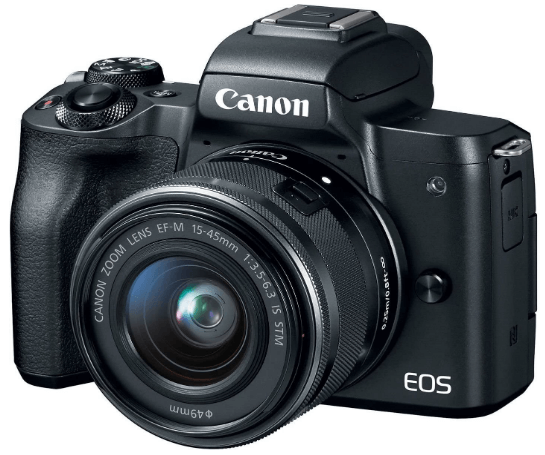
Sensor: 24.2MP APS-C | Mount: Canon RF | Video: 4K | Burst: up to 15 fps electronic | Price: about $700-900 new
If you want a current Canon mirrorless body that feels easy from day one, the EOS R50 is the strongest budget option. Canon’s autofocus is excellent, skin tones look good straight out of camera, and the flip screen makes it a better hybrid choice than many older entry-level bodies.
The R50 is especially strong for beginners who want to shoot both stills and short-form video. It is not the cheapest option here, but it is one of the smartest if you want to buy once and then build slowly into a more modern system. I would rather see a beginner buy this body and one decent lens than overspend on specs they will not use. For readers comparing this to the broader best mirrorless cameras market, the R50 is the point where value and usability meet.
Best for: beginners who want a current Canon body with real long-term potential.
Pros:
- Excellent autofocus and subject detection
- Very easy camera to learn on
- Good image quality and attractive JPEG color
- Good choice for hybrid photo and video use
Cons:
- Battery life is only average
- RF lens costs can rise quickly
- No in-body stabilization
3. Canon EOS R100 – Best Cheap New Mirrorless Camera
Sensor: 24.1MP APS-C | Mount: Canon RF | Video: 4K 24p | Price: about $500-650 new
The EOS R100 is not the most exciting camera on this list, but it is one of the most important because it gives budget buyers a real way into Canon’s current RF system without spending R50 money. If you are moving up from a phone or basic compact and mainly care about image quality, lens swapping, and a simple learning curve, this body makes sense.
It is a cost-controlled camera, so you give up some polish. The screen is basic, the body feels stripped down, and it is not my first choice for video-heavy work. But for everyday stills photography, it is a respectable starting point and a more honest budget recommendation than pretending every buyer should stretch to $900.
Best for: first-time interchangeable-lens buyers who want to stay on a tight budget.
4. Used Canon EOS M50 Mark II – Best Used Buy for Beginners
Sensor: 24.1MP APS-C | Mount: Canon EF-M | Video: 4K | Price: about $450-650 used
The EOS M50 Mark II is still one of the easiest mirrorless cameras to recommend to beginners if you are comfortable buying used. It handles well, the menus are simple, the flip screen is genuinely useful, and Canon’s color science flatters people and family scenes nicely. I would still choose it over some weaker new cameras when the price is right.
The obvious warning is the EF-M mount. Canon has moved on, so this is a value play, not a future-proof play. If you want a cheap camera that just works and you are unlikely to build a large lens collection, that may not matter much. For casual family shooting, travel, and learning the basics, it remains one of the better used deals in mirrorless.
Best for: beginners who want the smoothest learning curve at used-market prices.
5. Canon M200 – Best Tiny Mirrorless Camera for Casual Use

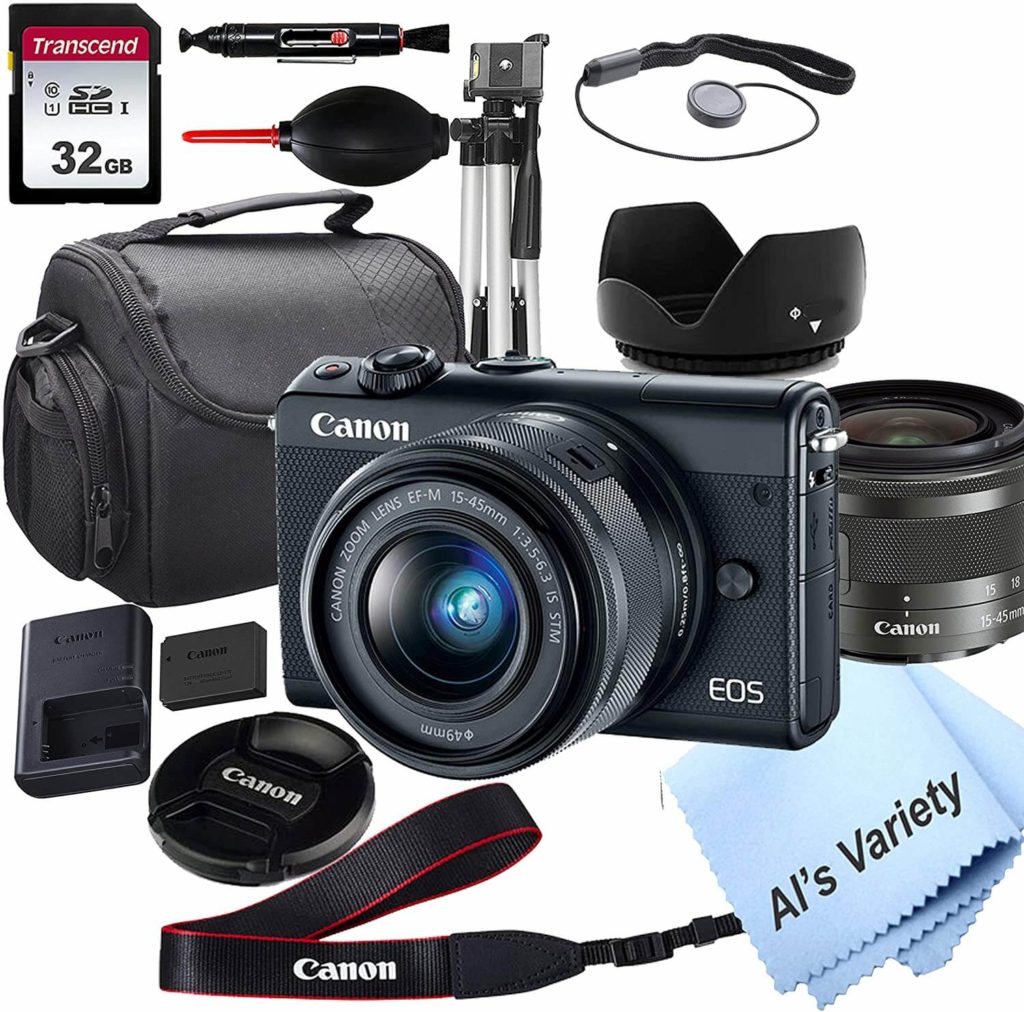
Sensor: 24.1MP APS-C | Mount: Canon EF-M | Video: 4K | Price: about $400-550 used
The Canon M200 is one of the most underrated choices in this category. It is small, simple, and very approachable, which makes it perfect for buyers who know they will not carry a heavier camera every day. If you want a compact step up from your phone without dropping into a dead-end point-and-shoot, this body still makes a lot of sense.
It is especially good for travel, family moments, and everyday photography where convenience matters more than pro handling. If you want more detail on that body specifically, the site already has a dedicated Canon M200 review worth linking into this topic cluster.
Best for: casual shooters who want a very small interchangeable-lens camera.
6. Panasonic Lumix G7 – Best Budget Mirrorless Camera for Video Value

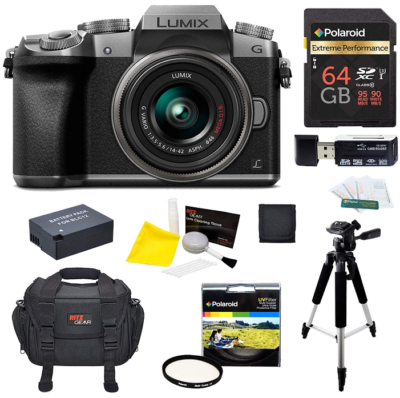
Sensor: 16MP Micro Four Thirds | Mount: Micro Four Thirds | Video: 4K | Price: about $400-550 new or used
The Panasonic Lumix G7 is older now, but it keeps surviving in budget recommendations because it remains one of the cleanest low-cost paths into decent 4K video. The body handles more like a small DSLR than a tiny rangefinder-style camera, which many beginners actually prefer. It is comfortable in the hand, easy to understand, and supported by an excellent Micro Four Thirds lens market.
If you mainly care about stills, other cameras on this list give you newer autofocus and better sensors. If you care about learning video on a budget, the G7 is still a serious contender. I would happily hand it to a beginner filmmaker before I handed them a cheaper but more frustrating body. That is why I keep it in the guide while dropping weaker, less focused choices.
Best for: budget video creators and beginners who want strong handling.
7. Nikon Z30 – Best Nikon Budget Mirrorless for Video Creators
Sensor: 20.9MP APS-C | Mount: Nikon Z | Video: 4K | Price: about $650-800 new
The Nikon Z30 is the Nikon budget body I recommend first to buyers who do not care about having a viewfinder. Nikon built it with video creators in mind, but it is also a pleasant little stills camera if you prefer composing on the rear screen. The autofocus is solid, the files look good, and it gets you into Nikon’s Z system without forcing you into a bigger spend.
For buyers comparing Nikon’s affordable mirrorless path, the Z30 is often a better pure value choice than the Z50 if your shooting style is casual, travel-focused, or creator-led. The site already has a Nikon Z30 review, which makes this an easy internal link opportunity when publishing.
Best for: beginner Nikon users, creators, and buyers who mostly use the rear LCD.
8. Nikon Z50 – Best Nikon Budget Mirrorless with a Viewfinder

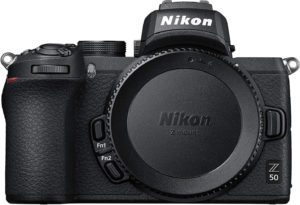
Sensor: 20.9MP APS-C | Mount: Nikon Z | Video: 4K | Price: about $750-900 new
The Z50 is the more photographer-focused Nikon budget body because it gives you a proper electronic viewfinder and stronger all-around handling than the Z30. If you are coming from a DSLR or simply prefer composing with the camera to your eye, the Z50 is the better choice.
I like the grip, the general handling, and Nikon’s color rendering here. The compromise is that it is no longer a truly cheap camera once you price it with good glass. It is a good budget mirrorless recommendation only if you know you want to stay in Nikon’s system. Otherwise, the Sony A6100 and Canon R50 are slightly easier to recommend to general buyers.
Best for: Nikon fans and DSLR upgraders who want a compact APS-C mirrorless body.
9. Olympus OM-D E-M10 Mark IV – Best Small Travel Mirrorless Camera
Sensor: 20MP Micro Four Thirds | Mount: Micro Four Thirds | Video: 4K | Price: about $650-800 new
The OM-D E-M10 Mark IV is a smart choice for photographers who value size, stabilization, and portability over spec-sheet bragging rights. It is especially good for travel, street, and day-to-day photography because the body is light, the stabilization helps in lower light, and the Micro Four Thirds lens ecosystem keeps your whole kit compact.
This is not the camera I would buy for tracking fast sports or for the most demanding autofocus work. It is a camera I would buy if I wanted something enjoyable, light, and easy to carry often. In photography, the camera you actually bring with you usually beats the heavier one left at home.
Best for: travel, walkaround photography, and lighter kits.
10. Used Fujifilm X-S10 – Best Stretch Budget Mirrorless Camera
Sensor: 26.1MP APS-C | Mount: Fujifilm X | Video: 4K | IBIS: Yes | Price: about $800-1,000 used
If your budget can stretch beyond the strict entry-level tier, a used Fujifilm X-S10 is one of the smartest upgrades you can make. The image quality is excellent, the body is much more satisfying than the cheapest cameras on this list, and the stabilization gives it real everyday advantages for handheld shooting.
This is the camera I would point enthusiasts toward if they know they are serious about photography and do not want to feel limited too quickly. It is no longer a cheap recommendation, but it is one of the best value recommendations. If you want more choices in that higher budget bracket, the site’s best mirrorless cameras under $1,000 guide is the natural next read.
Best for: enthusiasts willing to buy used to get noticeably better quality.
Which Budget Mirrorless Camera Should You Buy?
If you want the safest recommendation, buy the Sony A6100. It is the best overall balance of autofocus, image quality, lens choice, and resale value.
If you want the easiest modern Canon recommendation, buy the Canon EOS R50.
If you want the cheapest sensible new Canon mirrorless camera, buy the Canon EOS R100.
If you want the best used beginner deal, buy a Canon EOS M50 Mark II or Canon M200 from a reputable used dealer.
If you want the strongest video value on a tight budget, buy the Panasonic Lumix G7.
If you want Nikon and need a viewfinder, buy the Nikon Z50. If you want Nikon for creator-style shooting, buy the Nikon Z30.
Best Budget Mirrorless Camera for Beginners
For complete beginners, I would usually start with the Canon EOS R50 if the budget allows. It is easy to learn, the autofocus is trustworthy, and Canon’s menus do not fight you. If your budget is tighter, a used Canon EOS M50 Mark II is still one of the friendliest beginner cameras around. Readers who are still deciding between mirrorless and other entry-level formats should also look at the site’s best cameras for beginners guide.
How Much Should You Spend on a Budget Mirrorless Camera?
Here is the simplest way to think about the 2026 budget mirrorless market:
- $400-550: best value lives in used Canon EOS M bodies, older Sony bodies, and Panasonic Micro Four Thirds options.
- $600-800: strongest value zone for serious beginners. This is where the A6100, Z30, OM-D E-M10 Mark IV, and some R50 bundles start to make sense.
- $800-1,000: stretch zone where you stop buying “cheap” and start buying “good enough for years.”
If your budget is much lower than this, it can make sense to look at fixed-lens compacts or even the site’s ultra-budget options like best digital cameras under $100, but that is a different kind of buying decision.
Frequently Asked Questions
Is mirrorless better than DSLR on a budget?
Usually yes, especially if you are starting fresh in 2026. Budget mirrorless bodies now offer better autofocus, better live view shooting, and better long-term system support than most cheap DSLRs. DSLRs can still make sense if battery life or used lens availability is your top priority, but mirrorless is the better default choice for most new buyers.
Should I buy a discontinued mirrorless system?
Sometimes. Canon EF-M bodies like the M50 Mark II and M200 are still good value if you are buying them as affordable tools rather than long-term system investments. If you want the safest future path, stick with Sony E, Canon RF, Nikon Z, Fujifilm X, or Micro Four Thirds.
What is the best cheap mirrorless camera for YouTube?
The Panasonic G7 and Nikon Z30 are strong value choices, while the Canon EOS R50 is the better all-around answer if you shoot both video and stills.
What is the best cheap mirrorless camera for travel?
The Olympus OM-D E-M10 Mark IV and Canon M200 are excellent travel choices because they keep both body size and overall kit size manageable.
Final Verdict
The best budget mirrorless camera in 2026 is not automatically the cheapest one. It is the one that gives you the cleanest path to better photos without forcing expensive mistakes later. For most buyers, that is the Sony A6100. For Canon users, it is the Canon EOS R50. For tighter budgets, the smartest values often come from used cameras like the Canon EOS M50 Mark II, Canon M200, and the still-useful Panasonic Lumix G7.
If you want a camera that feels more ambitious and can stretch the budget, look at a used Fujifilm X-S10. If you want to stay fully beginner-friendly, stick with Canon or Sony. The key is not to chase every spec. Pick the camera whose autofocus, lens options, size, and price make sense for the way you actually shoot.
Last update on 2026-04-06 / Affiliate links / Images from Amazon Product Advertising API


