



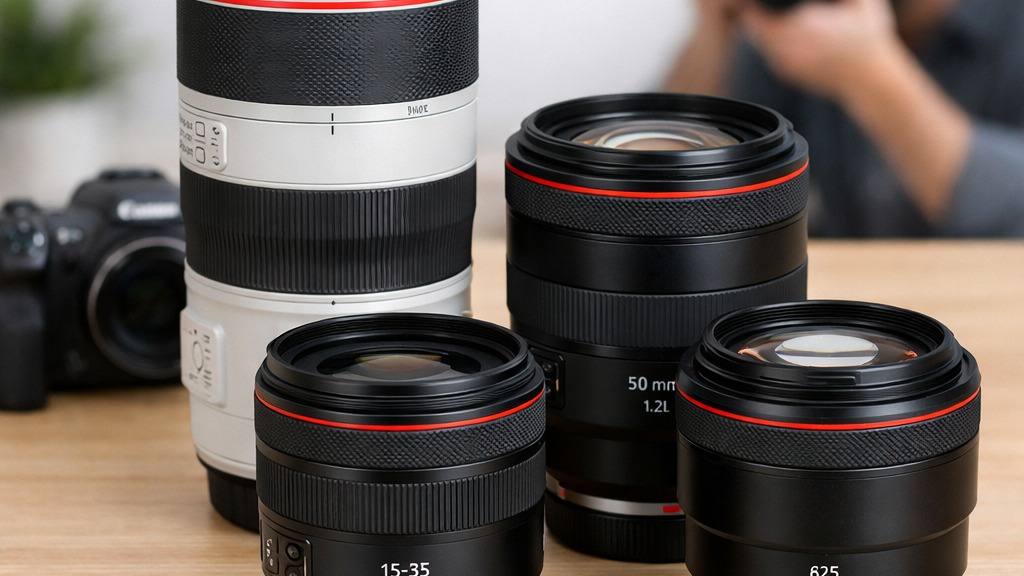
Choosing the best Canon RF lenses is easier when you match glass to the way you actually shoot. I’ve built this guide around real-world use on Canon mirrorless bodies, with practical picks for portraits, travel, landscapes, wildlife, and video.
Contents
- How to choose the right RF lens for your shooting style
- Best Canon RF lenses for everyday photography
- Best Canon RF lenses for portraits and weddings
- Best Canon RF lenses for travel and landscapes
- Best Canon RF lenses for sports and wildlife
- Best Canon RF lenses for video and hybrid creators
- Budget picks and premium upgrades worth considering
- Frequently asked questions
- Key takeaways for choosing the best Canon RF lenses
How to choose the right RF lens for your shooting style
When it comes to building a kit around the Canon RF lens mount, I always encourage photographers to start with their shooting habits and creative goals. The best Canon RF lenses for you will depend on what, how, and where you shoot. Rather than just shopping by specs or price, think first about your subjects, your favorite focal lengths, and how much gear you are willing to carry. This approach leads to better images and more enjoyment out in the field.
If you are pairing these RF lens choices with a full-frame mirrorless body, it helps to consider how the camera itself fits your workflow for travel, everyday shooting, and video. That broader perspective can make lens decisions easier, especially after reading this Canon EOS R5 review.
Prime or zoom which makes more sense
The choice between RF prime vs zoom is one of the biggest decisions. Primes are known for their sharpness, wide apertures, and unique character. They force you to move your feet, which can improve composition skills over time. For portraits and weddings, a fast 50mm, 85mm, or 135mm prime can create gorgeous separation and creamy backgrounds. However, they do lock you into a single field of view.
Zooms, on the other hand, are all about flexibility. Modern Canon RF zooms like the RF 24-70mm f/2.8L IS USM or RF 24-105mm f/4L IS USM offer great sharpness and image quality, covering a range of scenes from landscapes to candids. For travel and street photography, a well-chosen zoom can save you from swapping lenses and missing moments. Ultimately, the balance comes down to whether you value flexibility or the special look of a fast prime. Many photographers, myself included, use both – one zoom for versatility and a favorite prime for creative shots.
What aperture size stabilization and weight really change
Aperture, stabilization, and weight are not just numbers on a spec sheet – they shape your entire shooting experience. Fast lenses (f1.2, f1.4, or f1.8) let in more light and create beautiful background blur. They are essential for low-light work, indoor events, and portraits. However, they also tend to be heavier and larger.
Stabilization, either built into the lens or the camera body, is a game-changer for handheld shooting in low light. Many Canon RF lenses include optical image stabilization, which pairs with IBIS in newer mirrorless cameras. This lets you shoot at slower shutter speeds without motion blur – especially helpful for travel, landscapes, or video work.
Weight matters more than you might expect. A lighter lens means you will carry your camera more often and shoot for longer. For travel and street, I prefer compact zooms or primes under 500g. For portraits or weddings where image quality is everything, I will happily accept a heavier, faster lens. In the end, your comfort and shooting endurance matter just as much as technical performance.
Best Canon RF lenses for everyday photography
The best standard zoom for most photographers
When friends ask me for a single lens recommendation, I almost always suggest a standard zoom. The best RF standard zoom combines versatility, quality, and reasonable size. The Canon RF 24-105mm f4L IS USM is my top pick for an everyday Canon RF lens. Its range covers wide scenes, portraits, and tight details without feeling too bulky. The constant f4 aperture is bright enough for most light, and the built-in stabilization means sharp shots even at slower shutter speeds.
For those who want a brighter lens and do not mind extra weight, the Canon RF 24-70mm f/2.8L IS USM is a pro workhorse. It is sharper, faster, and built to handle tough conditions, making it a favorite for wedding and event shooters. However, the 24-105mm f4L is more affordable and lighter, making it a better fit for daily use or travel.
If you favor something lighter and more affordable, the Canon RF 24-105mm f4-7.1 IS STM is a great alternative. While it does not match the L-series for optics or build, it covers the same useful range, is very compact, and works well for family, street, or casual travel photography. Compact digital cameras are making a comeback in 2026, but a lightweight RF zoom still offers more creative control and image quality for most people.
Best Canon RF lenses for portraits and weddings
Why fast primes still give the most character
Portrait and wedding photographers know the power of a fast prime lens. The best Canon RF portrait lens is the one that brings out natural skin tones, flattering depth, and sharp detail where it counts. The Canon RF 85mm f/1.2L USM is the premium RF portrait benchmark for subject separation and creamy bokeh. It is big and expensive, but there is a reason it is the first choice for many professionals.
I have also found the RF 50mm f/1.2L USM to be incredibly versatile for both full-length portraits and tighter headshots. The 50mm focal length works well in smaller spaces and produces a classic, cinematic look. If you want L-series quality in a slightly more compact package, consider the RF 85mm f/2 Macro IS STM. It offers excellent sharpness, useful macro capability for detail shots, and built-in stabilization at a much lower price and weight. This makes it a top RF wedding lens for shooters who want great results on a budget or need to carry multiple primes during long events.
For those who prefer a zoom for portrait work, the Canon RF 70-200mm f/2.8L IS USM is hard to beat. It delivers superb compression and background blur at longer focal lengths, making it ideal for candid moments and ceremonies. The new telescoping design makes it far more portable than older EF versions, so it fits easily in most bags.
Best Canon RF lenses for travel and landscapes
When a lightweight zoom beats a bag full of primes
Travel and landscape photography often demand flexibility, portability, and consistent image quality. I have tried carrying several primes on long trips, but I always end up wishing for the convenience of a single lightweight zoom. The best Canon RF travel lens in my experience is the RF 24-105mm f4L IS USM. It covers everything from wide landscapes to tight architectural details and portraits. The weather sealing and robust build give peace of mind when exploring new destinations.
If you want something even lighter for all-day shooting, the RF 24-105mm f4-7.1 IS STM is worth considering. For more dedicated landscape shooters, the RF 15-35mm f/2.8L IS USM brings ultra-wide coverage and fast aperture, perfect for dramatic vistas and night skies. Its stabilization also allows handheld shooting during sunrise or sunset, when light is low and tripods are not always practical.
For hikers and those who truly prioritize weight, the RF 16mm f2.8 STM and RF 35mm f1.8 Macro IS STM are two excellent primes. The 16mm is tiny and ideal for sweeping views, while the 35mm doubles as both a street lens and a close-up tool for details. Both are sharp, affordable, and easy to tuck into a small bag, making them top picks for lightweight Canon RF lens kits.
Best Canon RF lenses for sports and wildlife
Sports and wildlife photography put the Canon RF lens mount to the test. Fast action, long distances, and fast-moving subjects call for specific features: quick autofocus, plenty of reach, and effective image stabilization. Over the past few seasons, I have relied on several RF telephoto options in the field, and each has strengths depending on your shooting style and subject matter.
How much reach you really need in the field
Before investing, consider your typical shooting distance. The best Canon RF wildlife lens or best RF telephoto lens often comes down to a balance between focal length, speed, and portability. If you shoot birds or distant mammals, a minimum of 400mm is ideal. For field sports, 300mm can be enough, especially if you have sideline access.
My go-to for versatility is the Canon RF 100-500mm f/4.5-7.1L IS USM. It covers most needs in a single lens, offering sharpness across the zoom range and reliable stabilization. Its autofocus is fast enough for birds in flight and football alike, though tracking the fastest subjects requires practice and good technique. If you need more light or want better subject separation, the Canon RF 400mm f/2.8L IS USM delivers stunning results and is a favorite among professional sports photographers – though it’s heavy and costly.
For those who want portability, the Canon RF 600mm f/11 IS STM and 800mm f/11 IS STM are unique options. They are much lighter and more affordable than traditional super-telephotos, though the fixed f/11 aperture limits low-light use. In good daylight, they work well for static wildlife or distant birds, especially when paired with Canon’s latest autofocus systems.
- Top premium pick: Canon RF 400mm f/2.8L IS USM
- Best all-rounder: Canon RF 100-500mm f/4.5-7.1L IS USM
- Lightweight option: Canon RF 600mm f/11 IS STM
- Budget reach: Canon RF 800mm f/11 IS STM
When choosing a Canon RF sports lens, also think about autofocus speed and weather sealing. Fast glass helps in dim gymnasiums and under stadium lights, but reach and tracking are more important for most outdoor sports and wildlife scenarios.
Best Canon RF lenses for video and hybrid creators


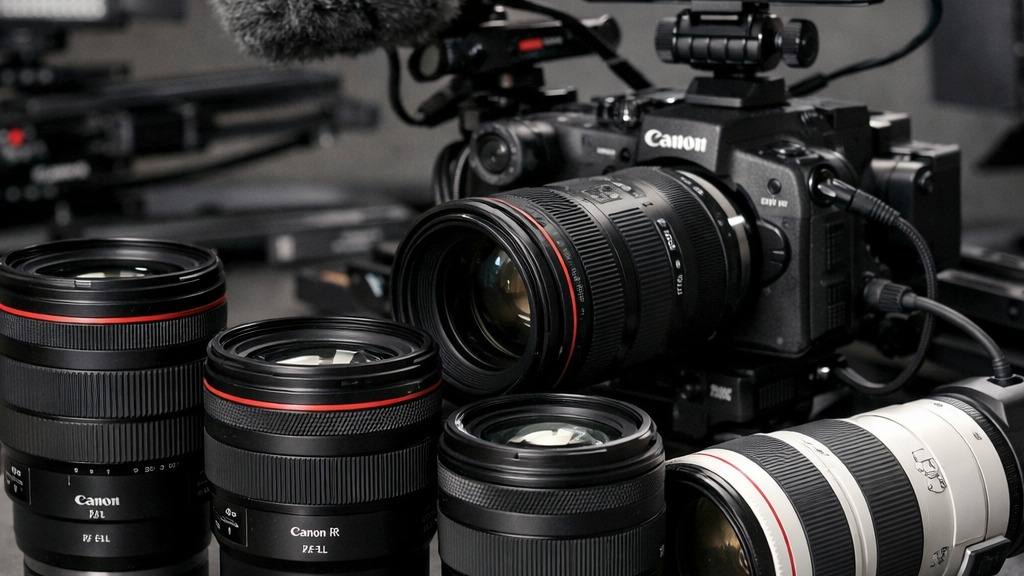
Video and hybrid shooting demand lenses that are sharp, silent, and flexible. Many Canon RF mount users shoot both stills and video, so I always recommend lenses with smooth, quiet autofocus and minimal focus breathing. The best Canon RF lens for video should also balance size and weight, especially for handheld or gimbal work.
The Canon RF 24-70mm f/2.8L IS USM is a workhorse for hybrid creators. Its zoom range covers everything from wide establishing shots to mid-telephoto portraits. The stabilization is excellent, and autofocus transitions are smooth and nearly silent. I use this lens for interviews, handheld B-roll, and even some low-light event coverage.
For vlogging or travel videos, the Canon RF 15-35mm f/2.8L IS USM is hard to beat. It offers a true wide angle, allowing you to capture yourself and your environment without distortion. The constant f/2.8 aperture is great for low light, and its image stabilization is effective for walking shots or handheld clips.
If you want something more compact, the Canon RF 35mm f/1.8 IS Macro STM is a sleeper hit for video. It’s lightweight, sharp, and offers a natural perspective for run-and-gun shooting. The STM motor is quiet, and the macro capability adds creative options for close-up product or detail shots.
- Hybrid all-rounder: Canon RF 24-70mm f/2.8L IS USM
- Wide vlogging lens: Canon RF 15-35mm f/2.8L IS USM
- Lightweight option: Canon RF 35mm f/1.8 IS Macro STM
For true cinema work, Canon’s RF cine primes are now available, but for most hybrid creators the L-series zooms and compact primes strike the best balance between quality and convenience. Always test for focus breathing if you do a lot of rack focus work, as some RF lenses handle this better than others.
The Canon RF lens lineup covers a wide price range. You do not need to spend a fortune to get excellent results, especially with recent compact and STM lens releases. If you are looking for affordable Canon RF lenses or the best budget RF lens, here are a few favorites:
- Canon RF 50mm f/1.8 STM: An affordable, sharp, and lightweight prime for portraits, street, and video. Its fast aperture is great for beginners and separates subjects nicely from backgrounds.
- Canon RF 16mm f/2.8 STM: Compact and ultra-wide, perfect for travel, landscapes, and vlogging. It’s not as sharp in the corners as L-series glass, but the field of view is impressive for the price.
- Canon RF 24-105mm f/4-7.1 IS STM: An all-purpose zoom that covers daily needs, with decent stabilization and a lightweight design. It’s a great starter lens or backup for travel and family events.
If you are ready for a premium upgrade, the Canon RF L lens series is the gold standard. The RF 85mm f/1.2L IS USM, for example, is world-class for portraits, with dreamy bokeh and lightning-fast autofocus. The RF 28-70mm f/2L USM is another standout, offering an unrivaled combination of speed and image quality, though it is hefty and expensive.
In my experience, the best value often comes from pairing one high-quality L-series zoom with a fast budget prime. This gives you flexibility for most situations without overloading your camera bag or your wallet. As the RF lineup grows, keep an eye out for third-party options, which are likely to bring even more value to the system.
Frequently asked questions
What is the best Canon RF lens for beginners?
For most beginners, the Canon RF 50mm f/1.8 STM is a smart starting point. It’s affordable, sharp, and works well for portraits, street, and even video. Pair it with a kit zoom like the RF 24-105mm f/4-7.1 IS STM for maximum versatility without breaking the bank.
Are Canon RF lenses worth the price compared with EF lenses?
In my experience, RF lenses offer better autofocus, improved image stabilization, and edge-to-edge sharpness compared to their EF counterparts. The cost is higher, but the benefits are clear, especially if you shoot demanding subjects or care about future compatibility. For casual shooters, EF lenses (with an adapter) can still deliver great results at a lower cost.
Which Canon RF lens is best for portraits?
The RF 85mm f/1.2L IS USM is the ultimate portrait lens, delivering gorgeous background blur and superb sharpness. For those on a budget, the RF 50mm f/1.8 STM gives beautiful results and is much lighter and more affordable.
What is the best all around Canon RF lens for travel?
The RF 24-105mm f/4L IS USM is my pick for travel. It combines a useful zoom range, good stabilization, and a lightweight build. If you want something even smaller, the RF 24-105mm f/4-7.1 IS STM is a great alternative for casual trips or compact kits.
Key takeaways for choosing the best Canon RF lenses
- The best Canon RF lenses depend more on your subjects and shooting habits than on price alone.
- A strong standard zoom and one fast prime will cover most photographers better than a large lens collection.
- For travel, weight and versatility matter just as much as sharpness.
- Wildlife and sports shooters should prioritize autofocus speed, reach, and stabilization over maximum aperture.
With Canon’s RF lens mount, you have more choice than ever before. Match your lens to your style, and your photography or video will benefit immediately.